
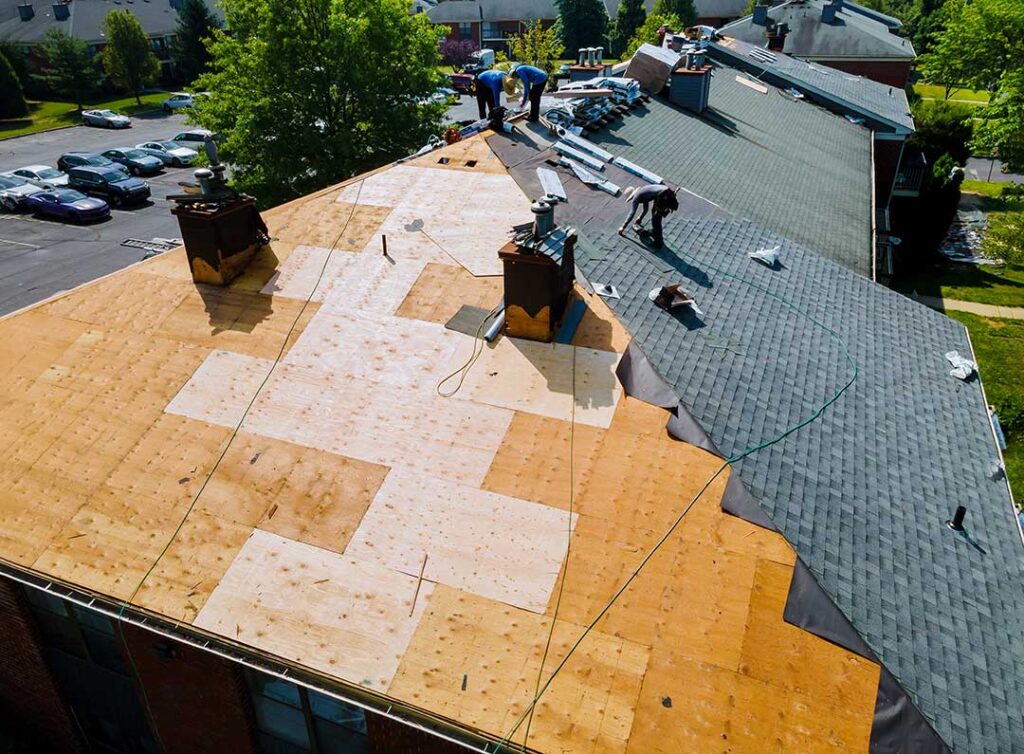
Roof stains are common on homes in Vestal, NY, especially after repeated moisture, snow, shade, and seasonal temperature changes. A dark streak or patch is not always a sign of a failing roof, but it should be identified before it spreads or hides a more serious problem.
What causes dark streaks on shingles?
The most common cause of dark, vertical streaks is algae growth. Roofing algae feed on moisture and can spread across asphalt shingles, particularly on roof sections that receive limited sunlight. The marks may look black, gray, greenish, or brown and often become more noticeable after wet weather.
Other possible causes include:
- Moss or lichen growing between or on top of shingles
- Leaves, pine needles, or other organic debris holding moisture against the roof
- Rust washing down from metal flashing, fasteners, vents, or chimney components
- Dirt and airborne particles collecting in damp areas
- Water stains caused by a leak beneath the roofing materials
- Discoloration from nearby trees, gutters, or deteriorating roof components
Algae streaks usually follow the slope of the roof as rainwater moves downward. A leak-related stain may appear around a roof penetration, skylight, chimney, vent, valley, or area where two roof sections meet.
Are roof stains only cosmetic?
Not always. Algae discoloration may begin as a surface appearance issue, but persistent moisture can contribute to the gradual loss of the roof’s clean, protective surface. Moss deserves more attention because it can lift shingle edges, trap water, and interfere with proper drainage.
A stain may also be an early warning sign of a leak. Water can travel along the underside of decking, rafters, insulation, or ceiling materials before appearing indoors. For that reason, a ceiling mark should not be dismissed simply because the roof stain looks minor from the ground.
Signs that the issue may be more than cosmetic include:
- Missing, cracked, curled, or lifted shingles
- Granules collecting in gutters or at downspouts
- Damp insulation or a musty odor in the attic
- Water marks on ceilings or upper walls
- Soft or discolored roof decking
- Rusted flashing or exposed fasteners
- Stains that become darker after rain or snowmelt
How can a homeowner tell algae from moss?
Algae generally appears as flat streaks or broad dark areas. It does not usually create a thick, raised texture. Moss looks more like a green or yellow-green mat and may be visible along shingle edges, roof valleys, or areas where debris has accumulated.
Lichen can resemble small, crusty spots or pale green growth attached firmly to the roofing surface. It may be harder to remove without damaging the shingles.
The distinction matters because algae may remain mostly on the surface, while moss and lichen can physically affect the shingles. However, appearance alone cannot confirm whether the roof is leaking or structurally sound.
What is the safest way to inspect roof stains?
Begin with a ground-level inspection. Look at the roof from several angles and note whether the stains are streaks, patches, raised growth, or marks concentrated near roof features. Binoculars can help reveal missing granules, lifted shingle edges, or damaged flashing without requiring anyone to climb.
An attic inspection can provide additional information. During daylight, look for small points of light through the roof deck, though not every light opening indicates a leak. Also check for:
- Damp or darkened wood
- Water trails on rafters
- Wet insulation
- Mold-like odors
- Stains near vents, chimneys, valleys, and roof-to-wall intersections
A ceiling stain that is actively spreading, dripping, or accompanied by bulging drywall requires prompt attention. Electrical fixtures near water should not be touched until the area is safe.
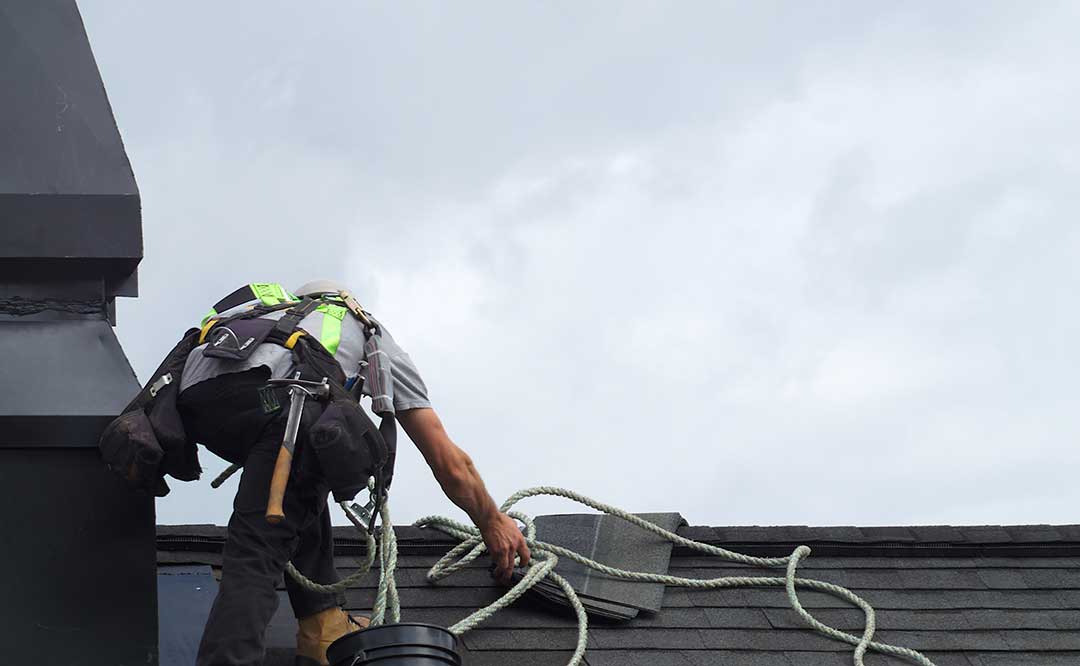
Walking on a sloped roof is hazardous even when the surface appears dry. Shingles can be slippery, brittle, or weakened beneath moss and algae. Roof surfaces may also conceal soft decking.
Can roof stains be cleaned?
Some surface stains can be reduced with a roof-safe cleaning method, but aggressive cleaning can shorten the life of asphalt shingles. Pressure washing is especially risky because the force can remove protective granules, loosen shingles, and drive water beneath overlapping courses.
A safer approach typically involves a properly diluted cleaning solution designed for roofing materials, gentle application, and careful runoff control. The solution should not be mixed with other household chemicals, and it should not be allowed to damage siding, plants, soil, painted surfaces, or metal components.
Cleaning does not repair damaged shingles or eliminate the source of recurring moisture. If overhanging branches, clogged gutters, poor ventilation, or shaded damp areas remain unchanged, staining may return.
Should bleach be used on roof stains?
Bleach-based solutions are sometimes used for algae and moss, but they must be handled cautiously. Concentrated bleach can damage vegetation, corrode metal, discolor exterior materials, and harm nearby surfaces. Mixing bleach with ammonia, acids, or other cleaners can create dangerous fumes.
The roof material, surrounding landscaping, weather conditions, and runoff path all matter. A cleaning method that is acceptable for one roof may be unsuitable for another. Manufacturer guidance should be checked before applying any chemical treatment.
It is also a misconception that every dark stain needs chemical removal. If the mark is actually rust, a leak, or deteriorating flashing, cleaning the surface will not solve the underlying problem.
How can roof staining be reduced in the future?
Moisture management is the main preventive strategy. Area homes experience repeated cycles of rain, snow, freezing, thawing, and spring debris, so small maintenance problems can become more noticeable over time.
Helpful measures include:
- Keep gutters and downspouts clear so water does not back up beneath shingles
- Remove leaves and branches that remain on the roof
- Trim vegetation that creates persistent shade or drops debris
- Keep roof valleys and drainage paths free of buildup
- Check attic ventilation and insulation for moisture problems
- Inspect flashing around vents, chimneys, skylights, and roof edges
- Avoid allowing moss to become thick enough to lift shingle edges
Gutters should be checked after autumn leaf drop and again after winter conditions have passed. Ice, snow, and debris can shift materials or block drainage even when the roof looked sound in the fall.
When does a roof stain require urgent attention?
A roof stain deserves prompt evaluation when it appears with active dripping, a spreading ceiling mark, damaged shingles, exposed roof decking, or water entering around a light fixture. The same applies to stains that develop soon after a storm or heavy snowmelt.
A small, stable algae streak with no interior moisture may not require emergency action, but it should still be observed. Photographing the area from the ground and recording changes after rain can help distinguish a stable surface stain from a developing leak.
The key question is not simply whether the roof looks dirty. It is whether the discoloration is holding moisture, damaging roofing materials, or signaling water movement beneath the surface.
